Releasing Two Asiatic Black Bear Cubs into the Wild in the Kurdistan Region
On 31 August, the Forestry Police of Sulaimani Province, Kurdistan Region of Iraq, announced that they had released two bear cubs (one male and one female) into their natural habitat.
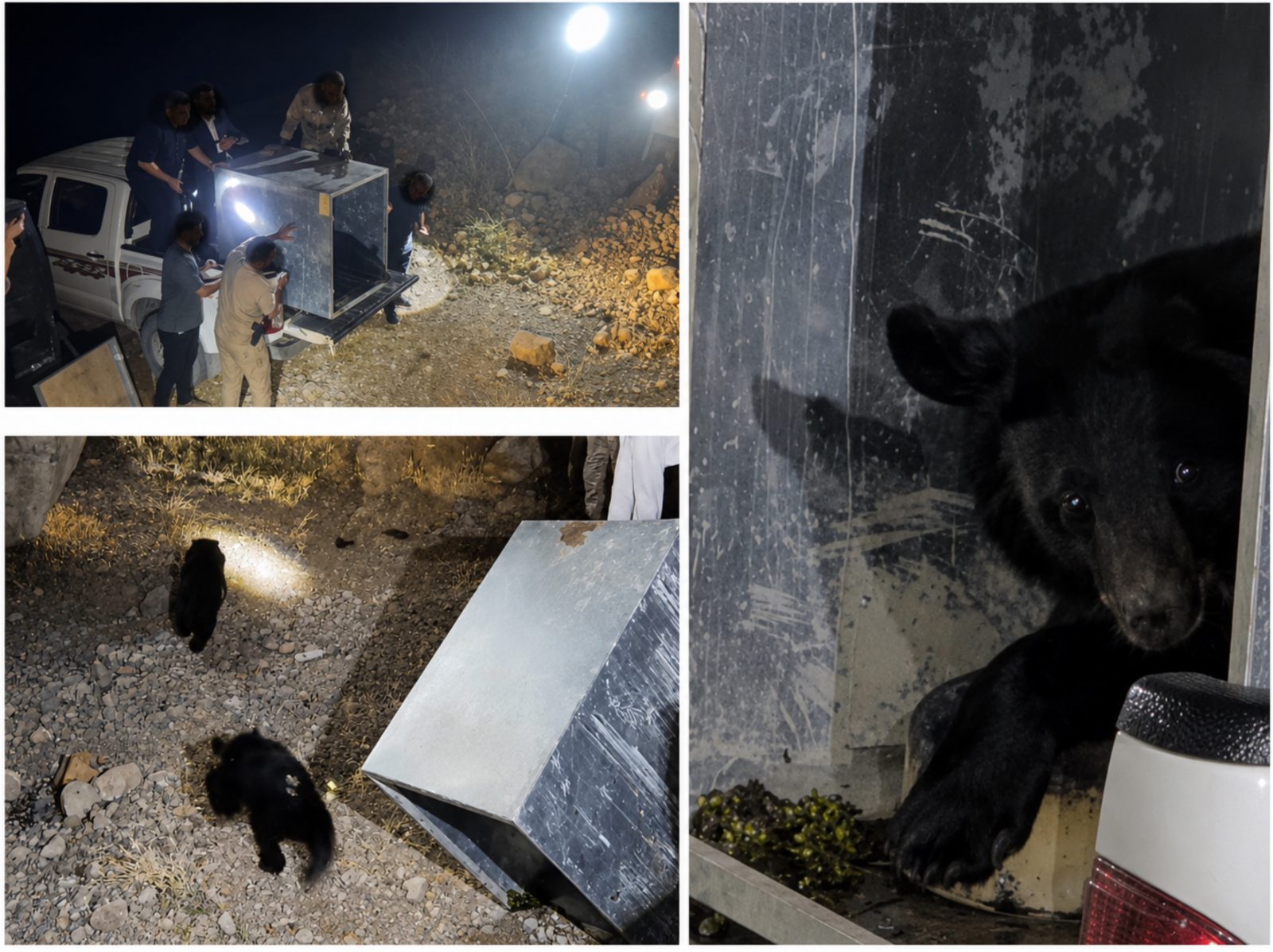
The bear cubs were Asiatic black bears (Ursus thibetanus), approximately 2.5 years old. They had been brought into the Kurdistan Region through the illegal wildlife trade from Iran. This bear species is easily identified by the distinctive cream-colored crescent on its chest and the mane of long hair around its face. Adults typically weigh between 50 and 200 kg. Asiatic black bears are well adapted to climbing, with large heel pads that help them climb trees and forage for nuts and fruits. The species is currently classified as Vulnerable according to the IUCN Red List of Threatned Species.
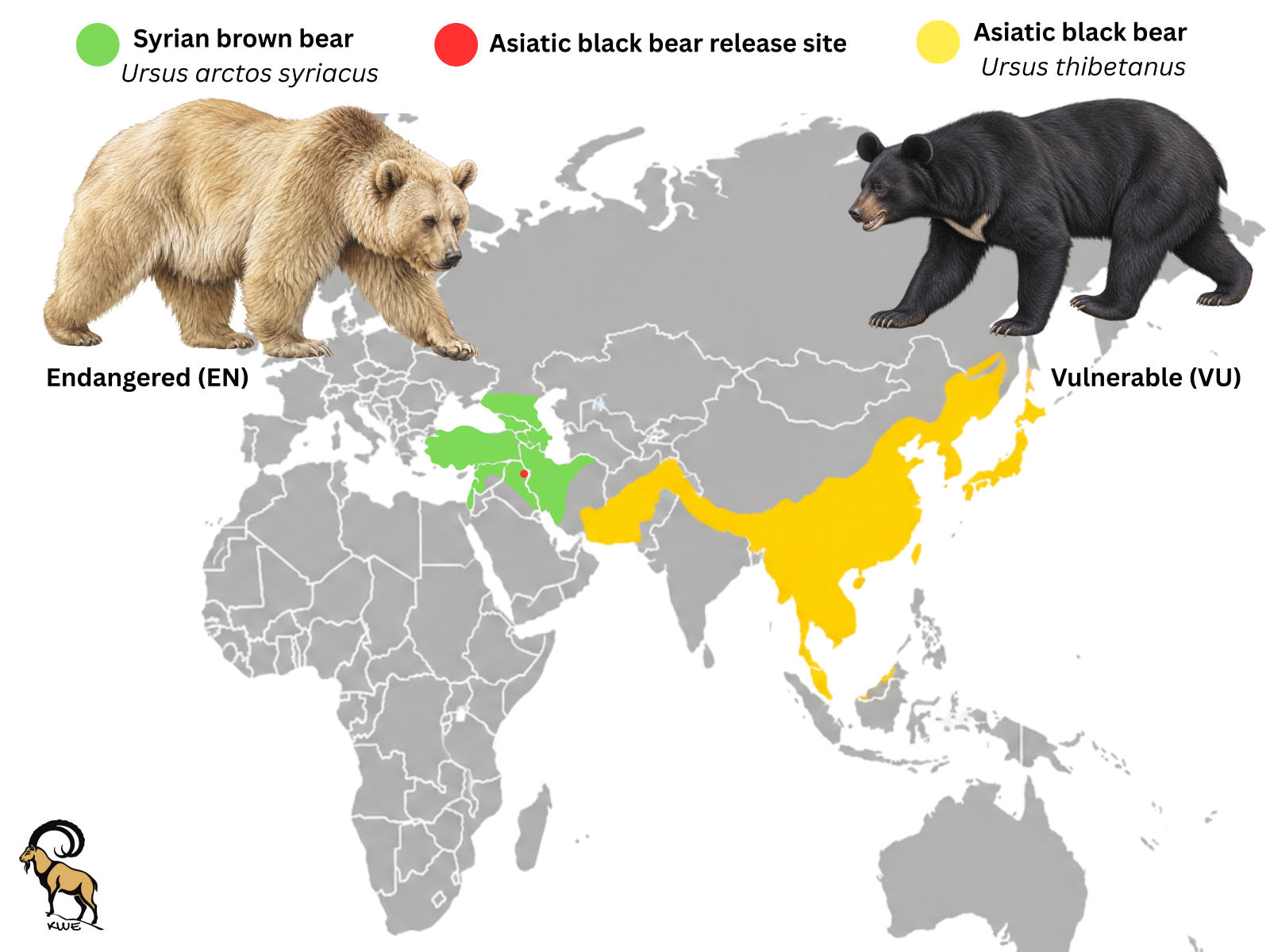
The Asiatic black bear is not native to the Zagros Mountain range, including the Kurdistan Region. The only bear species currently found in the Kurdistan Region and Iraq is the Syrian brown bear (Ursus arctos syriacus), which is the largest extant carnivore in the region. Its populations are now scattered across the Kurdistan Region, Türkiye, Iran, Azerbaijan, Georgia, Armenia, and Turkmenistan. It is an Endangered subspecies that faces increasing threats in the Kurdistan Region, including habitat loss and degradation, the impacts of climate change, and growing human–wildlife conflicts.
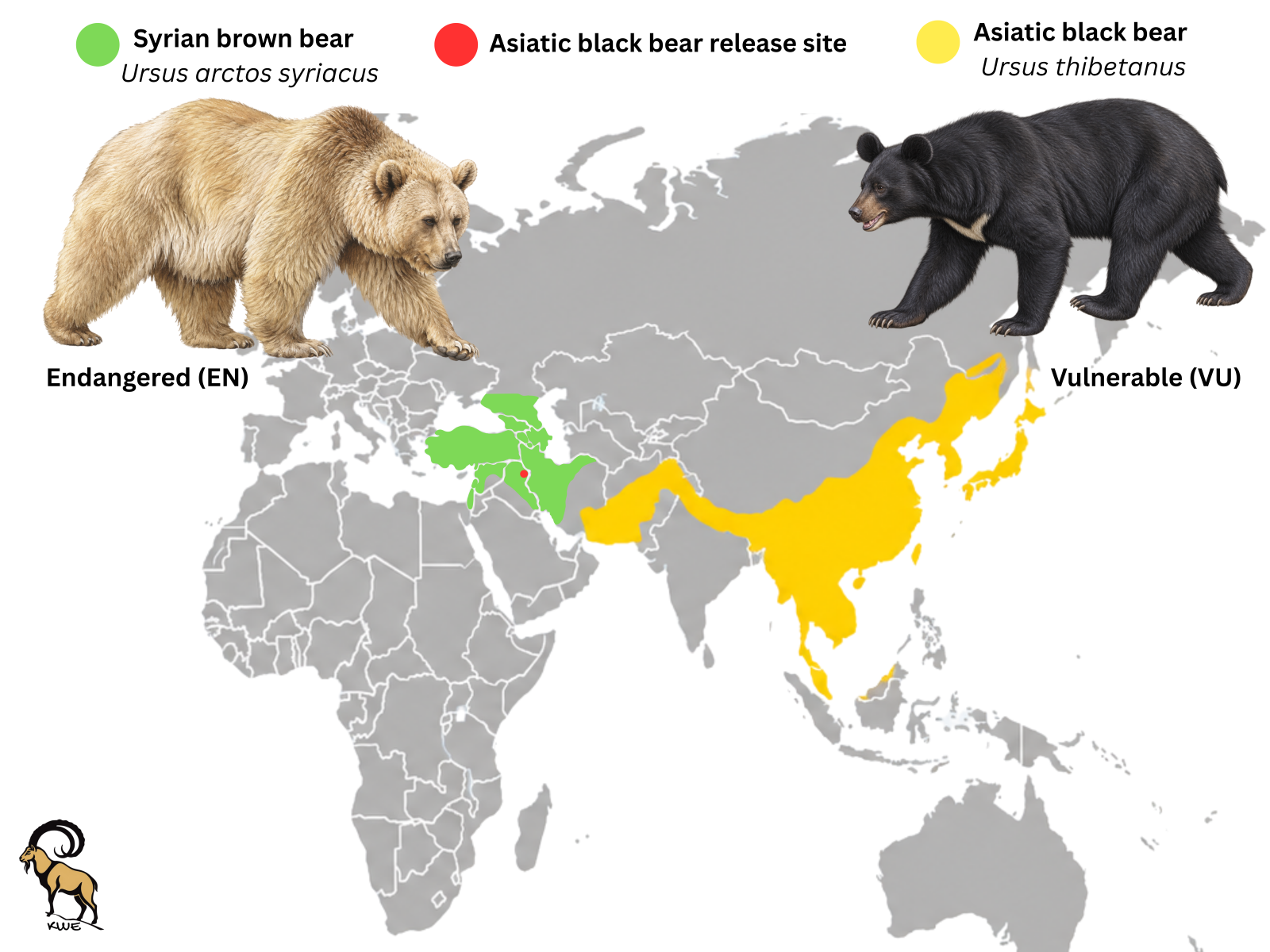
A map showing the distribution of the Asiatic black bear (yellow) and Syrian brown bear (green), with the Asiatic black bear cub release site indicated in red. Designed by Soma I. Majeed.
After being captured by Asayish forces, the two Asiatic black bear cubs were handed over to the Forestry and Environmental Police. Following a decision by the judge of the Court of Inquiry, the cubs were subsequently released into the wild. However, because the Kurdistan Region lies outside the natural range of the Asiatic black bear, releasing these animals into the area could have serious long-term consequences. The cubs may struggle to find suitable food, shelter, and other resources needed to survive and adapt to the local environment. Their presence could also have unforeseen effects on local biodiversity and food webs, while potentially increasing the risk of human–wildlife conflict. If they are unable to obtain sufficient natural food, they may move closer to villages and tourist areas in search of food, potentially bringing them into conflict with local communities and visitors.The bears were released in Yalanpe (also known as Elanpi), a historic and popular tourist village in the Khurmal District of Halabja Province, Kurdistan Region. The village is situated on the slopes of the Hawraman Mountains.
Both the Syrian brown bear and the Asiatic black bear are predominantly solitary, omnivorous, and generally elusive mammals. However, the Asiatic black bear is notably more arboreal and better adapted to climbing, whereas the Syrian brown bear is predominantly terrestrial. Both species modify their activity patterns in response to temperature, food availability, and human disturbance. They are generally avoid direct contact with humans. However, habitat degradation and the increasing availability of anthropogenic food can bring bears into agricultural areas and settlements. Syrian brown bears may cause conflict through livestock depredation and damage to crops and orchards, whereas Asiatic black bears are particularly associated with crop and fruit raiding in parts of their range. Direct attacks on humans are uncommon but may occur when bears are provoked, cornered, or defending their young.
Our Recommendations:
As local wildlife researchers and conservationists, we recommend that the two cubs be safely recaptured using professional wildlife-capture and handling methods and placed in appropriate temporary captivity until more information can be obtained about their country of origin, health status, age, and other relevant aspects of their condition and history. We also recommend that the relevant authorities establish contact with the authorities in the country of origin to determine the appropriate course of action for these Vulnerable Asiatic black bears. If their origin can be confirmed, exploring the possibility of returning them to their native range, in accordance with appropriate wildlife regulations and veterinary and conservation protocols, could be a positive step toward ensuring their welfare and supporting the conservation of the species.
Stronger wildlife-trade management by the Kurdistan Region Government and the Board of Environmental Protection and Improvement is needed, particularly in zoos and ornamental and pet markets. Improved monitoring, regulation, and enforcement could help prevent similar cases from occurring in the future.
More training should also be provided to Forestry Police and staff of relevant environmental authorities on the region’s native biodiversity, particularly on identifying native and non-native species. This would help ensure that confiscated animals are handled appropriately and that decisions regarding their release are based on sound ecological and conservation principles.
In addition, an updated and accessible list of the region’s native fauna should be developed and made widely available to all relevant governmental authorities. Such a resource would help officials rapidly identify non-native species and prevent inappropriate releases into the wild, as occurred in the case of the Asiatic black bears.
Currently, we are in direct contact and collaboration with the Board of Environmental Protection and Improvement, Halabja Province Section, and local veterinarians to locate and recapture the bears.
Soma I. Majeed & Soran H. Ahmed
Wildlife Researcher and Conservationist
University of Sulaimani, Kurdistan Region, Iraq
01 Sepember 2026
Comments (0)
Be the first to comment.